Forgotten Authors: Rosel George Brown

Forgotten Authors: Rosel George Brown

Rosel George Brown

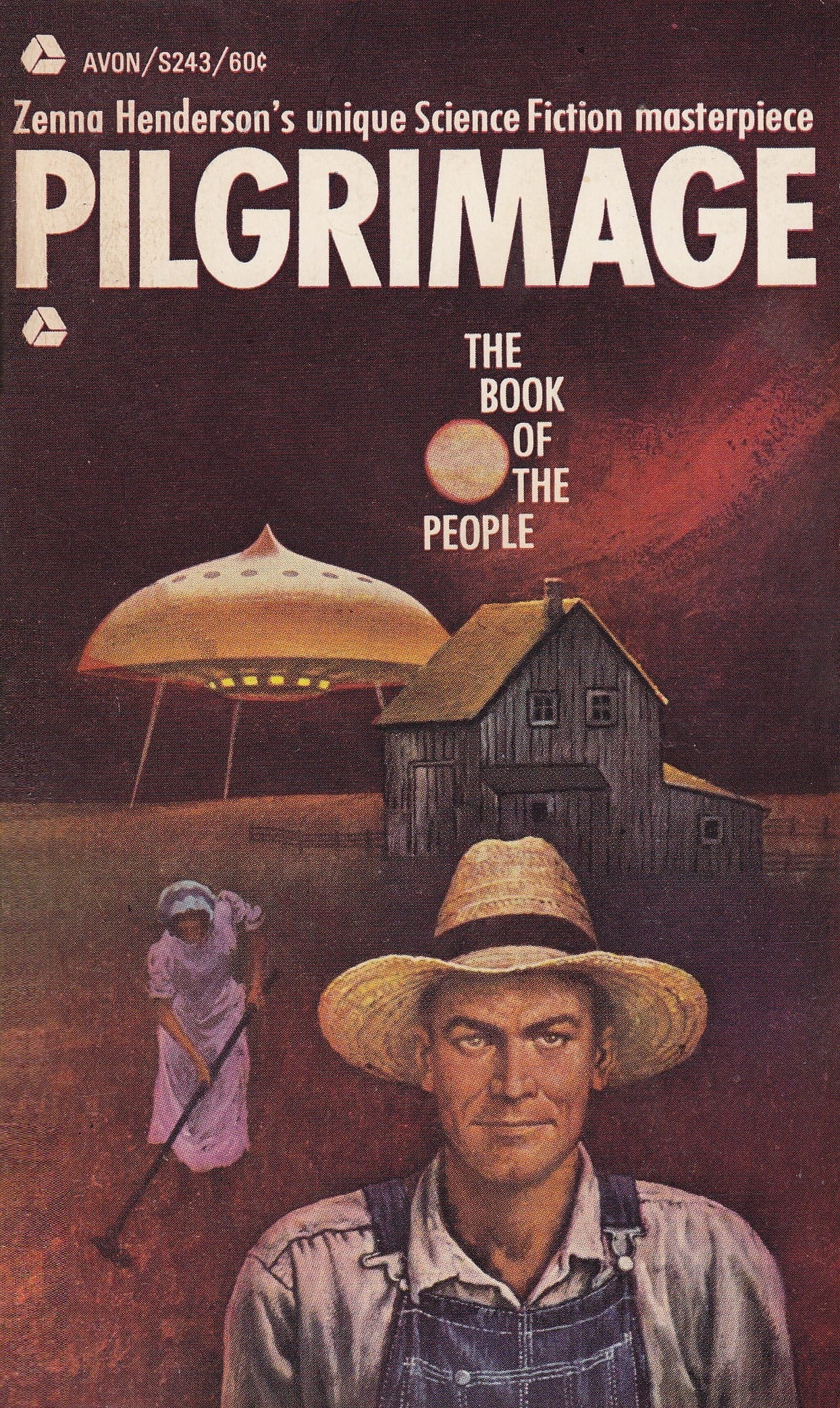
Rosel George was born in New Orleans, Louisiana on March 15, 1926. She attended Sophie Newcomb College and earned a Master of Arts degree in Greek at the University of Minnesota. In 1947, she married W. Burlie Brown, a lawyer who would go back to school in 1949 to earn a Ph.D. in history before joining the Tulane University faculty in 1951. Aside from the period when she was attending graduate school in Minnesota and Burlie was attending graduate school in North Carolina, Rosel George Brown lived in New Orleans. The Browns had two children. For about three years, Rosel worked as a welfare visitor.

Brown began publishing science fiction in 1958 when her story “From an Unseen Censor” appeared in the September issue of Galaxy Science Fiction alongside established authors Isaac Asimov, Damon Knight, Arthur C. Clarke, and Willy Ley. The following year, she published seven additional stories in If, Fantastic Universe, Star Science Fiction, F&SF, Galaxy, and Amazing, demonstrating the ability to sell to multiple editors. In 1959, she was also nominated for the Hugo Award for Best New Writer, alongside Kit Reed, Louis Charbonneau, Pauline Ashwell, and Brian W. Aldiss.

Read More Read More

Here Comes Everybody: Stand on Zanzibar by John Brunner

Here Comes Everybody: Stand on Zanzibar by John Brunner


Stand on Zanzibar (Del Rey/Ballantine, June 1976). Cover by Murray Tinkelman

Watching their sets in a kind of trance
Were people in Mexico, people in France.
They don’t chase Jones but their dreams are the same—
Mr. and Mrs. Everywhere, that’s the right name!
Herr und Frau Uberall or les Partout,
A gadget on the set makes them look like you.

Stand on Zanzibar is perhaps John Brunner’s most significant novel. Up until then, he had written competent science fiction on familiar themes such as psionics (Telepathist) and time travel (The Productions of Time). With Stand on Zanzibar he began writing larger books that were no longer purely ways of playing with such standard ideas, but examinations of our own world in a fantastic mirror. At the same time, they used a more sophisticated literary method — not the surrealism that inspired much of the New Wave, but a naturalism similar to nineteenth-century fiction.

Read More Read More

A Fine Sword & Sorcery Anthology: The Spell of Seven, edited by L. Sprague de Camp

A Fine Sword & Sorcery Anthology: The Spell of Seven, edited by L. Sprague de Camp


The Spell of Seven (Pyramid Books, June 1965). Cover by Virgil Finlay

L. Sprague de Camp was a major player in the paperback Sword & Sorcery boom of the 1960s. I had the good fortune to meet him and his wife; both were urbane and erudite. I was able to correspond with him while in the ranks of REHupa, the Robert E. Howard United Press Association. De Camp’s role in promoting Robert E. Howard — and his own work with it — is not without controversary, which I’ll address.

But not today. De Camp was also a popular and successful fiction writer, both fantasy and SF, and even nonfiction. I’ll address those aspects in time, but today I’ll just bring some of his editing work into focus. He edited a number of fine Sword & Sorcery anthologies, most of which featured REH. These include Swords & Sorcery, The Spell of Seven, Warlocks and Warriors, and The Fantastic Swordsmen. I have two copies of The Spell of Seven and will discuss it first.

Read More Read More

Dragonslayer: How to Slay Your Dragon

Dragonslayer: How to Slay Your Dragon

Dragonslayer (Paramount Pictures, June 26, 1981)

Dragonslayer (109 minutes; 1981)

Written by Hal Barwood and Matthew Robbins. Directed by Matthew Robbins.

What is it?

A sorcerer’s apprentice travels across sixth-century England to battle a dragon terrorizing a small kingdom. The jerk of a king and the local populace eventually prove more trouble to deal with than the dragon. Unfortunately, the dragon loses.

Noteworthy

A joint production between Paramount and Walt Disney, Dragonslayer was only the third PG-rated film associated with Disney. Indeed it feels like a Disney movie that has taken a dark turn along the way. Although not a profitable one.

Read More Read More

What I’ve Been Watching: February, 2026

What I’ve Been Watching: February, 2026

I haven’t told you about What I’ve Been Watching since last year! Of course it’s only February 16, so I guess we can keep a sense of proportion.

But I’ve been watching a lot of stuff this year. As always, many are re-watches. I opened up the DVDs for The Adventures of Brisco County Jr, which is still in my Top Two over thirty years after it’s lone season (Screw Fox for canceling this, and Firefly, so quickly).

Psych (the other show in my Top Two) is still frequently on screen, and I just started jumping back into Columbo; even adding more than ‘Just one more’ to my book library.

So, let’s talk about a few things.

THE NIGHT MANAGER

I watched this when it aired back in 2016. I kept thinking that Tom Hiddleston would be a great James Bond. I still do. He’s a natural. And Hugh Laurie was simply excellent. His cold, rational villainy was spot on.

So, Hiddleston, Laurie, and Olivia Colman in a super thriller based on a John Le Carre novel. I thought this was great. Definitely recommended.

Read More Read More

Classics of Sword & Sorcery: Echoes of Valor, edited by Karl Edward Wagner

Classics of Sword & Sorcery: Echoes of Valor, edited by Karl Edward Wagner

Paperback editions of all three volumes of Echoes of Valor, edited by Karl Edward Wagner (Tor Books, February 1987, February 1991, and September 1991). Covers by Ken Kelly, Rick Berry, and Rick Berry

The three book Echoes of Valor anthology series from TOR was edited by Karl Edward Wagner, who wrote excellent Sword & Sorcery tales himself, and could recognize good ones when he saw them. These were not anthologies of new stories, but reprints. Each contained a Robert E. Howard tale. Here are some capsule reviews.

Echoes of Valor (1987, Cover Ken Kelly)

Contains one story each by Robert E. Howard, Fritz Leiber, and Henry Kuttner. Howard’s story is “The Black Stranger.” It’s a Conan tale but wasn’t published in REH’s lifetime. He rewrote it as a pirate tale featuring Black Vulmea called “Swords of the Red Brotherhood.” It still didn’t sell. Long after Howard’s death, L. Sprague de Camp rewrote it as “The Treasure of Tranicos” and it was published. It didn’t really need the rewrite in my opinion, so who knows why it wasn’t published initially.

Read More Read More

My Top Thirty Films, Part 5

My Top Thirty Films, Part 5

Mackenna’s Gold (Columbia Pictures, March 18, 1969)

Four horror films and a western.

Sounds like a great night in.

Mackenna’s Gold (1969)

Who’s in it?

Gregory Peck, Omar Sharif, Telly Savalas, Julie Newmar

What’s it about?

Marshal MacKenna (Peck) chances upon a map to a legendary treasure, and burns it after committing it to memory. A motley collection of outlaws, Apaches, traitors, and nefarious ne’er-do-wells coerce MacKenna into leading them to the hidden valley where the riches are rumoured to be, but infighting, jealousy, and greed soon thins out the gang. Will MacKenna make it out alive?

Read More Read More

Forgotten Authors: John Taine

Forgotten Authors: John Taine

John Taine/Eric Temple Bell

Eric Temple Bell was born in Aberdeen, Scotland on February 7, 1883, but when he was fifteen months old, his family moved to San Jose, California. After his father’s death in January 1896, the family moved back to the United Kingdom, settling in Bedford, England.

Bell was educated at Bedford Modern School, where his was inspired to study mathematics by Edward Mann Langley. He attended college at the University of London for a year before transferring to Stanford University, from which he graduated in 1904. He earned a Master of Arts degree from the University of Washington in 1908 and a Doctorate from Columbia University in 1912.

After graduating, Bell taught at the University of Washington and the California Institute of Technology, focusing on number theory and developed Bell series, which is a formal series used to study properties of arithmetical functions. He also gave his name to Bell numbers, which count the possible partitions of a set.

Read More Read More

Dark Muse News: Reviewing Conan – Spawn of the Serpent God by Tim Waggoner

Dark Muse News: Reviewing Conan – Spawn of the Serpent God by Tim Waggoner


Conan: Spawn of the Serpent God by Tim Waggoner (Titan Books, October 28, 2025). Cover artist unknown

Titan Books is on a roll, publishing Conan novels in quick succession: S. M. Stirling’s Blood of the Serpent (2022), John C. Hocking’s City of the Dead (2024), James Lovegrove’s Cult of the Obsidian Moon (2024), Tim Lebbon’s Songs of the Slain (2025), and Tim Waggoner’s Spawn of the Serpent God (2025).  And their 2026 schedule promises more with John Langan’s The Brides of Crom.

Here we delve into Tim Waggoner’s Spawn of the Serpent God. He’s a Bram Stoker Award-winning author known for horror and media tie-in fiction. Recently, he was honored for his Terrifier #2: The Official Movie Novelization with a Scribe Award for Best Adapted Novel from the International Association of Media Tie-in Writers. With approval from movie writer and director Damien Leone, Waggoner had doubled the size of the hack-and-slash script by adding lore and characterization (I plan to interview Tim Waggoner about this for Black Gate‘s Beauty in Weird/Horror series). Anyway, Waggoner’s knack for tie-ins and deepening characters is demonstrated again in Conan: Spawn of the Serpent as he highlights the dangers of Zamora.

Read More Read More

Heroic Historicals: Robert E. Howard, Harold Lamb, Poul Anderson and James Clavell

Heroic Historicals: Robert E. Howard, Harold Lamb, Poul Anderson and James Clavell

Robert E. Howard’s The Sowers of the Thunder (Ace Books, July 1979 and Zebra Books, March 1975) . Covers by Esteban Maroto and Jeff Jones

I define Heroic Fantasy (HF) as a type of fiction in which a heroic (bigger than life) figure uses a combination of physical strength and edged weapons (swords, axes, spears) to face bigger than life foes. The hero may be either male or female, but the focus is primarily on personal conflict between the hero and various villains.

I divide Heroic Fantasy into four categories: Sword and Sorcery, Sword and Planet, High Fantasy, and Heroic Historical. I’ve already discussed/defined S&S and S&P earlier here at Black Gate, so today I’m looking at Heroic Historical.

Read More Read More